This week I have
my first interview for a Physician Assistant program. I'm at once excited to have finally arrived at this stage, as well as worried about what will happen once the interviews begin. Last week I was fortunate enough
to have a mock interview with a friend who was once a member of the
admissions board at a nearby PA program. Even though I knew it wasn't
"for real," I was still rather nervous, especially since my friend made
it as realistic as possible, complete with a timed essay and panel
interview. Like the EMT practical exam, my "panel" used their poker faces, and I've realized that the lack of feedback is probably the most nerve-wracking part for me. I felt like I was trying to be honest and present myself as best I could, but I really wasn't sure how it was going. Apparently I did alright. Despite my nerves, I'm very glad I did the practice interview. At the very least I can approach these upcoming interviews with a better expectation of what questions will be asked, and I've already thought through many of them and have answered them within a similar context to what I'll soon be facing. While I'm still nervous about
what Friday may hold, I certainly feel a bit better prepared. So, Thursday it's off to Idaho and my first interview. Wish me luck! :)Tuesday, January 8, 2013
Interview Time has Arrived!
This week I have
my first interview for a Physician Assistant program. I'm at once excited to have finally arrived at this stage, as well as worried about what will happen once the interviews begin. Last week I was fortunate enough
to have a mock interview with a friend who was once a member of the
admissions board at a nearby PA program. Even though I knew it wasn't
"for real," I was still rather nervous, especially since my friend made
it as realistic as possible, complete with a timed essay and panel
interview. Like the EMT practical exam, my "panel" used their poker faces, and I've realized that the lack of feedback is probably the most nerve-wracking part for me. I felt like I was trying to be honest and present myself as best I could, but I really wasn't sure how it was going. Apparently I did alright. Despite my nerves, I'm very glad I did the practice interview. At the very least I can approach these upcoming interviews with a better expectation of what questions will be asked, and I've already thought through many of them and have answered them within a similar context to what I'll soon be facing. While I'm still nervous about
what Friday may hold, I certainly feel a bit better prepared. So, Thursday it's off to Idaho and my first interview. Wish me luck! :)Thursday, December 27, 2012
BSI. Scene Safe!
Almost two Saturdays ago I took the Oregon EMT practical exam. My fellow candidates and I had to prove our ability to perform six skills in a competent manner. These skills were medical and trauma assessments (if you want to know what this looks like, here's an example of a Trauma Assessment), providing spinal immobilization for a supine patient (getting a patient onto a long spine board), providing CPR and using an AED (see my PSA below), ventilating a patient with a Bag-Valve Mask and inserting a supraglottic airway, and then a random skill that was either caring for a bleeding wound and shock (what everyone wanted to get because it takes 30 seconds to do) or splinting a long bone (the skill I ended up doing -an easy skill that's made difficult by the 5 minute time limit). Everyone had done the skills so often in class that we all knew how to do them, and do them well. However, nerves are tricky things, and there's a lot of waiting that goes on at the state exam so you have plenty of time to agonize over mistakes you think you've made or all the ways you could mess up the next skill. Plus, the proctors aren't allowed to give you any indication of how you've done, so you often leave a station convinced you'd done something wrong, and since you can't talk to anyone about the exam, you sit there and go over everything over and over in your head. Then you just try to figure out if it was a critical fail or not. Luckily for everyone in our class, we eventually realized that our instructor had held us to a much higher standard than the state exam and I think almost all of us passed. We went to a place down the street to celebrate, talk about how we'd done, and cheer each new victorious compatriot as they joined us. It was a great way to end the class.
![]() |
| Guess I'm going to need to get one of these. ; ) |
![]() |
| How hypothermic was he when he was unfrozen? Question for the ages. |
![]() |
| You really should. |
![]() |
| This is all you need to do. Smiling not required. |
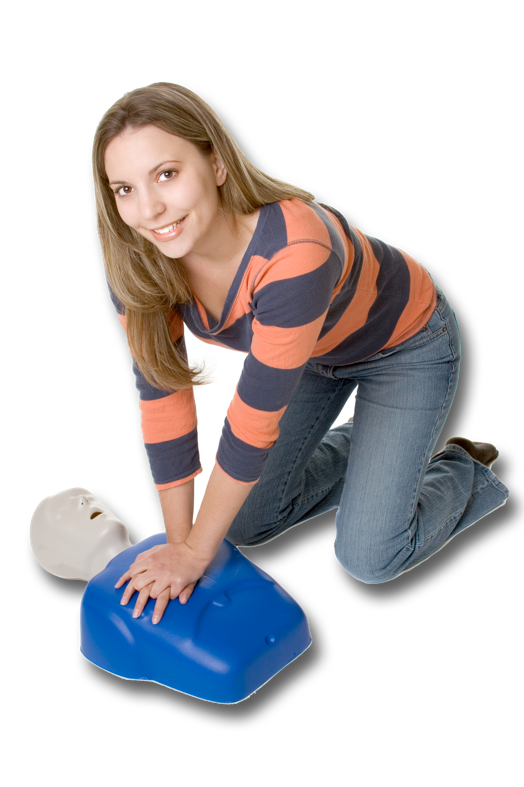
PSA 2: CPR. It's important. Sadly, few people learn how to do it, and even fewer perform it when it's needed. I have two things to say about it. First of all: just do it! CPR cannot, by itself, restart someone's heart and save their life (that's why you need a defibrillator aka an AED), but it causes the blood and oxygen to circulate so that the other cells of the body are still alive when you restart the heart. CPR classes take just a few hours, and the skills you learn are vital. You can find a course here: AHA CPR Classes. Even if you have never taken a class, you can still perform CPR. Lay people are now taught "compressions only CPR" which just means that all you do is the compressions -the pounding on the chest, rib-breaking part. There's no need to count or give breaths. It's simple. Scary, but simple. Basically, the compressions are the most important part of CPR, so please just do them until EMS can arrive. This podcast includes a discussion of the effectiveness of CPR: PodMed. In class we watched a real video of a guy who had a heart attack in his office and it took FIVE MINUTES before anyone began CPR, even though his wife arrived just as his attack was beginning. This should not be. My second tidbit about CPR is a slight modification to the first: definitely do CPR, but make sure the patient actually needs CPR first. This means you shake them and shout in their face, then if they don't respond you check for breathing and a pulse. If they have no pulse start CPR immediately. If they aren't breathing but have a pulse, you need to breathe for them. If they are both breathing and have a pulse chill out. They probably just fainted. Call 9-1-1 but don't go breaking their ribs. Our instructor told us about an old man who fainted while waiting in line at the bank and then woke up when "Rescue Ricky" immediately began CPR and broke his ribs. "Ricky" thought he'd saved the guy's life when really he just caused him agonizing pain. Or there was the group of "rescuers" who told the paramedic that a surfer had collapsed when walking back from the beach on a hot day, but was resisting their efforts to perform CPR. The poor surfer was merely overheated, and these people were trying to hold his arms down so he would stop fighting them as they tried do CPR. Please do CPR when needed, but don't let these latter stories be you.
P.S. -The title of this post comes from all the skills we perform as EMTs. The first two things you have to do when performing any skill is state that you have taken appropriate precautions by using body substance isolation (gloves, glasses, anything that prevents contact with bodily fluids) and that you have determined the scene is safe. We said "BSI, scene safe" so often that it almost became a single word we spat out without even thinking. That's good, because if you forgot to say either of the two phrases, you automatically failed the skill, even if you did everything else correctly.
![]() |
| We all started doing jazz hands whenever we said BSI to represent the imaginary gloves we had one. Then we started doing it without realizing it. Our instructor enjoyed mocking us for it. |
Tuesday, December 11, 2012
Just Because I Love Christmas
There's probably some clever way to actually have the music play, but I don't really feel like figuring that out, and I think it would really start to annoy people after a while. Instead, I've listed the title and the artist for each song so they're easy to find on iTunes. I've also posted links for some of the songs/albums because there is quite a bit of great Christmas music available for free. I really enjoy both Solid Rock Christmas albums. A couple songs, like Sing Emmanuel (an original composition by one of my friends) and the ones performed by Camerata Carolina aren't available commercially anywhere since they're performed by my friends or choirs I've sung with, but if you'd like them just let me know and I can arrange something. Enjoy!
Annika's Playlist for Christmas 2012
I Wonder as I Wander -Josh White and the Solid Rock Band
The Holly and the Ivy -Wayfarer
What Child is This? -Sarah McLachlan
O Come, O Come Emmanuel -Josh White and the Solid Rock Band
Carol of the Bells/Sing We Now of Christmas -BarlowGirl
Ave Maria -Rachael Lampa
Dormi Jesu -Camerata Carolina
Sing Emmanuel -Julie and Lindsey
Advent Song -Northern Conspiracy
Midwinter -Camerata Carolina
Christmas Canon -Trans-Siberian Orchestra
All Creation Sing (Joy to the World) -Seth Condrey
White Christmas -Dogs on Tour
Baby, Please Come Home -Anberlin
Merry Christmas, Here's to Many More -Relient K
Let it Snow, Let it Snow, Let it Snow -Michael Bublé
Christmas This Year -TobyMac & Leigh Nash
Coventry Carol -Celtic Lore
Jesu Joy -David Klinkenberg
Celtic Carol -Lindsey Stirling
Is There a Place For Us? -Mychael Danna
Waltz of the Snowflakes -Peter Ilyich Tchaikovsky
Is There a Place For Us? -Mychael Danna
Waltz of the Snowflakes -Peter Ilyich Tchaikovsky
March of the Wooden Soldiers -Steven Pasero
Let All Mortal Flesh Keep Silence -John Nilsen (if anyone knows of a good choral recording of this, please let me know)
Christmas Eve (Sarajevo 12/24) -Trans-Siberian Orchestra
Carol of the Bells/God Rest Ye Merry Gentlemen -The Piano Guys
God Rest Ye Merry Gentlemen/Slieve Russell -Dan Cleary
Road to Lisdoonvarna/Swallowtail Jig/Irish Washerwoman -Tony Elman
The Wayfarer Christmas EP (as well as his album of hymns) can be downloaded here:
The two Christmas albums from Solid Rock can be downloaded here: http://www.ajesuschurch.org/music/
Two Christmas albums from Dogs on Tour can be downloaded here:
http://www.dogsontour.org/archives/tag/music-for-winter
Two Christmas albums from Dogs on Tour can be downloaded here:
http://www.dogsontour.org/archives/tag/music-for-winter
The Advent Song (as well as some other great songs) can be downloaded here:
http://marshill.com/music/albums/northern-conspiracy-live
Update: My awesome friend Anne got me a great choral version of Let All Mortal Flesh Keep Silence and it is gorgeous. I also discovered the band Zerbin and they have a pretty rockin' version of O Come, O Come Emmanuel. You can get it here: http://noisetrade.com/zerbin.
| I'm very much in favor of stealing the idea of Weihnachtsmärkte (Christmas markets) from the Germans |
Update: My awesome friend Anne got me a great choral version of Let All Mortal Flesh Keep Silence and it is gorgeous. I also discovered the band Zerbin and they have a pretty rockin' version of O Come, O Come Emmanuel. You can get it here: http://noisetrade.com/zerbin.
Thursday, December 6, 2012
The Answer is Always Airway... and Administer Insulin
As encouraging as it is that I have a interviews at a couple PA programs, I know that many, if not most, people do not get admitted their first try.So, ever since September I've been taking an accelerated EMT program. So long as I finish the class and pass all my exams (a practical skills exam for Oregon and a written national exam), I will be a licensed Emergency Medical Technician by January. This will help me not only continue my medical education and get a job in a medical profession, but my hours as an EMT will count as medical experience hours. Such hours are required by almost every PA school, but are difficult to get because most schools want these hours to involve "hands on, direct patient care." Simply put, you have to somehow be responsible for a patient's care. This is why most volunteer positions in the U.S. will not count, and is one of the main reasons I spent a month at St. Joseph's hospital in Kenya last summer.
![]() |
| If we did our lab skills with dolls... |
| A tasty way to combat hypoglycemia |
I could do into far greater detail about all the things I've learned and the things I've taken away from the class, but I realize that not everyone will find it as fascinating as I do so instead I'll include a list of tidbits that I think people might find interesting/helpful as well as some quotes and phrases from the class that might give you all a better idea of what EMT class is like. One thing to note is that, even though our instructor is continually telling us to use our "big boy/girl words" (i.e. correct medical terminology), many of his phrases for the class sound like they fit in a kindergarten classroom.
Things You Should Know
- If you're pregnant and your water just broke, you probably have time to get to the hospital without needing EMS (Emergency Medical Services). This is especially true if this is your first pregnancy because the first stage of labor (the contractions) lasts an average of 16 hours for the first pregnancy (labor for subsequent pregnancies is typically much shorter). Apparently a lot of people call 9-1-1 for "imminent delivery" and contractions have just started. Sometimes the patient isn't even pregnant. Sometimes they're not even female (don't ask me how this works).
- Women who are having a heart attack often do not present with the stereotypical symptoms of crushing chest pain that often radiates to the left arm or leg. Sometimes women just feel like they're having stomachache or back pain.
- When EMTs respond to diabetic emergencies, they often encounter bystanders or family members who plead with them to give the patient some insulin. In light of this fact, I think I should state that insulin is not a diabetic "cure-all." All insulin does is act as the key that unlocks the cells and allows them to absorb glucose (sugar) from the blood. If someone is suffering from low blood sugar (hypoglycemia), insulin will not help them. It will actually make the situation worse, and might even kill them. This is why EMTs and paramedics are never allowed to give anyone insulin, and even nurses typically are not allowed to administer insulin to a patient without another nurse there to verify that they are giving the correct dose. Our instructor really stressed this fact, so now it has become a standing joke to reply with "administer insulin!" whenever he asks how to treat different patients.
- If someone is suffering from hypothermia, DO NOT rub their cold limbs. If they're that cold, it means that parts of them, including the plasma (which is mostly water) in their blood is actually frozen. If you rub them, the ice crystals in their blood can potentially slice their blood vessels to pieces. Yeah... not good. Call 9-1-1 and follow the dispatcher's instructions until EMS arrives.
- People are more likely to get overheated on days that are hot and dry than days that are hot and humid. This is because the moist heat tires you out quickly and people realize that they should cool off, whereas on dry and hot days, people can feel fine and then suddenly experience heat exhaustion or even heat stroke.
- Oregon is one of the most progressive states when it comes to what EMTs can do. For one thing, EMTs in other states can only give someone epinephrine if they have their own Epi-pen. Oregon realizes that not everyone carries their Epi-pen with them everywhere, so EMTs are allowed to give patients in anaphylactic shock epinephrine via an injection just under the skin. We're also allowed to check a patient's blood sugar. In other states, if a patient has a history of diabetes and an altered mental status, the protocol is to just give them glucose, even though the cause could be that the patient already has high blood sugar (hyperglycemia). The thinking is that a finger prick to check blood sugar is an "invasive procedure" and since most diabetic emergencies are due to low blood sugar (hypoglycemia), administering oral glucose should help, and giving glucose to someone who is hyperglycemic won't really hurt them (at least not in the short-term). While this is all true, Oregon still disagrees and says that EMTs should be able to just check the blood sugar so they know what the best course of action is and are also able to give accurate, detailed information to the hospital. Considering that we're allowed to deliver babies and insert supraglottic airways, pricking someone's finger or giving a small injection into the shoulder doesn't really seem like that big of a deal.
![]() |
| ...but for some reason this is just fine. |
![]() |
| This is too "invasive" for most states... |
Quotes/Phrases from Class
- Treat with diesel -getting someone to the hospital asap because there's nothing more you can do for them on scene
- Drive by Braille -I'm guessing most people can figure out what this means. It's really not how you want to be driving.
- Let's go get the stair chair -a code used to communicate that the scene is no longer safe (usually because you've just discovered that the patient or a bystander is crazy and/or dangerous). It works because you really only need one person to carry a stair chair, not everyone, but most people wouldn't know that so they don't become suspicious when all of the EMTs return to the ambulance.
- Blinkies and whoo-whoos -lights and sirens
- No pumpy-pumpy, no livey-livey -our instructor's explanation for why the heart is important
- Talky, talky then touchy, touchy -how to assess a responsive medical patient
- Rappin' and cappin' vs. limpin' and pimpin' -our instructor's phrases to describe the responses produced by activation of, respectively, the parasympathetic vs. the autonomic nervous systems. Most people probably know these responses better as "fight or flight" vs. "rest and digest"
- "Trauma is a naked sport."
- "If you don't have an airway, you don' have a patient." -This is why you make sure everyone has a "patent" (clear) airway before treating anything else (even life-threatening bleeding) and why the answer to almost every test question is "airway."
- "I open the patient's mouth. What do I see?" "The mouth is full of secretions and vomitus." "Yes!" -Real soundbite from skills lab
- "Screaming barfies" -also known as "hot aches," these result from warming extremities after you've gotten them so cold that you've reached the point of frost nip (precursor to frostbite). Basically, reheating them hurts so bad that you want to scream and barf at the same time.
- "Ding, ding, whoop, whoop. Here comes the hero wagon." -how firefighters arrive on scene
Here's one final soundbite from class. This sort of thing where someone just threw out a random answer happened a lot. It was always good comic relief.
Instructor: "Fresh water or salt water drowning, which is worse?
Everyone: "Salt."
Instructor: "Right, everybody knew that. And why is salt water
worse?"
That one guy: "Sharks!"
Should you be interested in how cops sometimes view EMTs and firefighters, here's a cartoon we watched when we discussed "mechanism of injury:" Freeway Patrol: Episode 5
Friday, November 23, 2012
'Tis the Season to Be Thankful
| A little Settlers of Catan after the feast |
I'm thankful to have a job. Anything helps in this economy and I'm incredibly blessed to be both a barista and an administrative intern. Even better is the fact that I work with some pretty great people. I'm also thankful to be three quarters of the way done with my EMT course. I've absolutely loved it, and I'll probably be posting soon about some of the things I've learned or some great quotes (there's quite a few) from the class, but I'll admit that it will be nice when I no longer have to spend 3-4 hours each week commuting to and from class, 16 hours in class, and another 6 or so doing homework. Not to mention that, once I pass the state and national exams, I could finally work as an EMT as well.
Psalms 69:30
Tuesday, November 6, 2012
Best Belated Birthday Present Ever
My birthday was a couple days ago. It was a good break in a sea of finals, mid-terms, assignments and job training, though over too soon. In fact, I spent the last few hours of it finishing a case study for genetics, rushing to finish it so I could wake up at 3:30am for barista training. Luckily for me, some of my presents have been a bit delayed so it's like the birthday isn't over yet. Today I received an email that topped all the other presents. While it may not have been intended as a birthday present, I like to think it was.
So to make a long story short, this morning I received my notification from a PA school telling me that I had been selected for an interview!! I almost cried I was so excited. The best part is, it's my one of my top choices. Now, obviously this doesn't mean that I'm in or that I'll be accepted because there's still a lot of people trying for just 75 spots, but it does mean that now I'm competing against approximately 260 other applicants instead of all 1500 who applied. It's a good, good day.
Monday, October 29, 2012
Waiting, Waiting, Waiting
![]() |
| Fall at home |
Life has been busy since I returned from Kenya. There have been lots of very good things, like the weddings of good friends, but also some less than fun things, like job hunting and finishing applications for PA schools. At the end of September I started taking an online Genetics course as a requirement for some of the PA programs I applied to, as well as an accelerated EMT course so I can gain more medical experience and, hopefully, a job. Add redecorating a bedroom, birthdays, and volunteering at the local hospital, and my life has been pretty full these last couple of months. This week is particularly busy since I have two finals (practical and written) for my EMT course, as well as a quiz and mid-term for Genetics. Whew.
Despite everything that is going on, I have to say that the most tiring thing might be all the waiting. I'm waiting to find out if I can shadow any PAs in the area. I'm waiting to hear if I got the job I recently interviewed for. I'm waiting for my birthday (ok, that's a fun one). Most importantly though, I'm waiting to hear back from PA schools. I applied to 8 this cycle and I've already received 3 rejections. However, it's been almost two months since my last rejection letter, so I'm hoping that means that the other schools are actually considering me. My top school is still in the running, so I'm hopeful. I know though that many PAs do not get accepted the first time they apply, and when there are 1500 applicants for 40 spots, it's easy to understand why. So here I am...waiting. Some days it's tough, but until I know anything for sure, I'm just going to keep preparing myself for every possibility, as well as enjoy the time I have at home with friends and family. After all, it's fall and that's simply one of the best times of the year.
Subscribe to:
Posts (Atom)


.jpg)